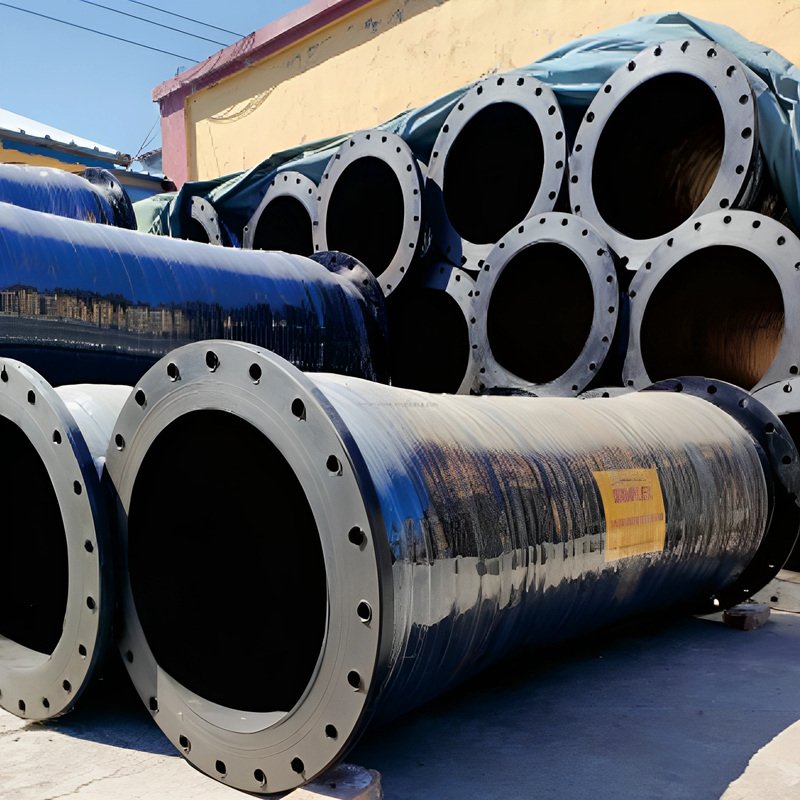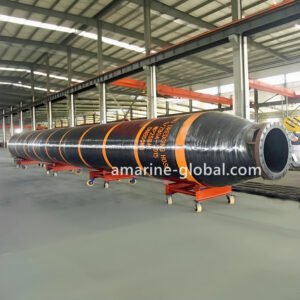
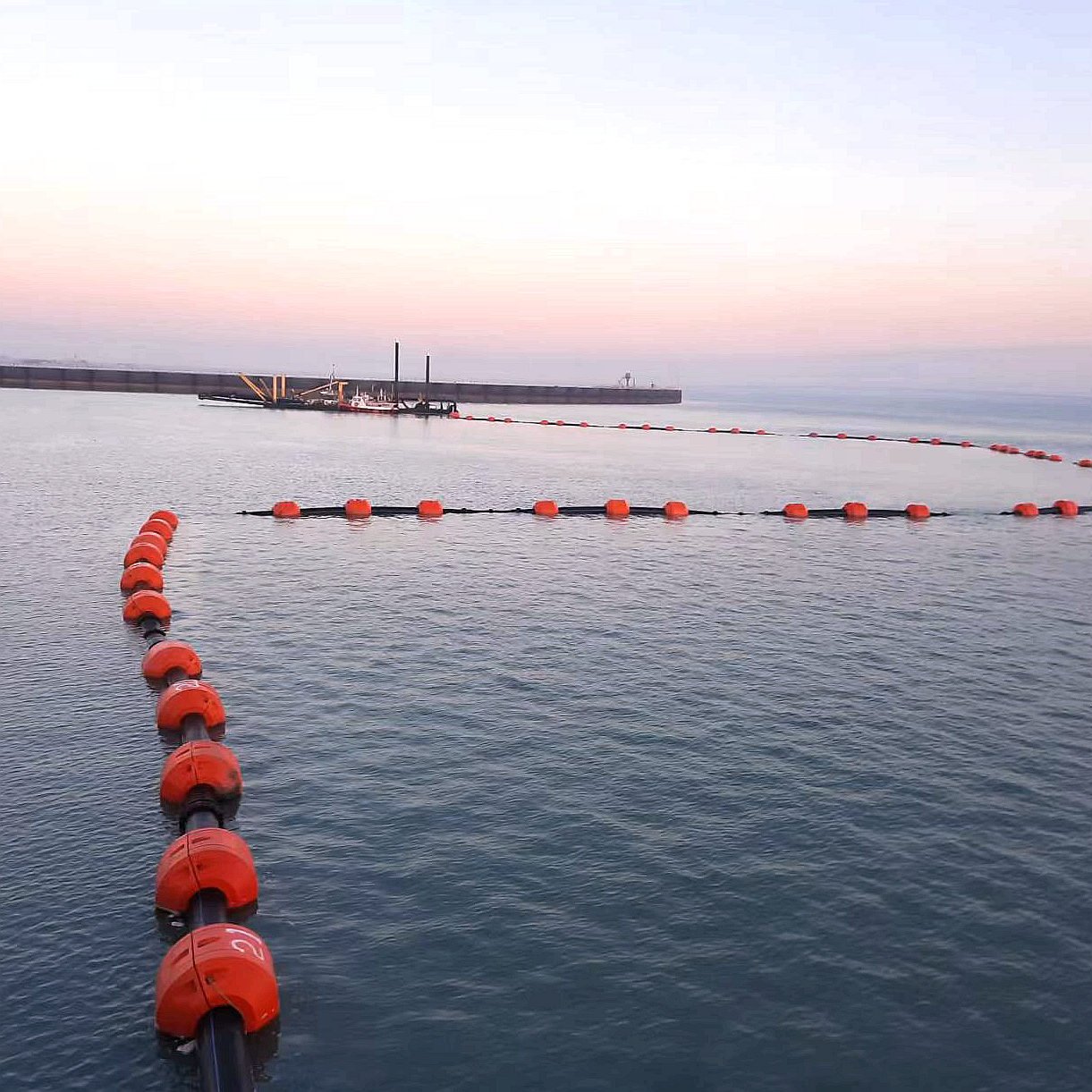
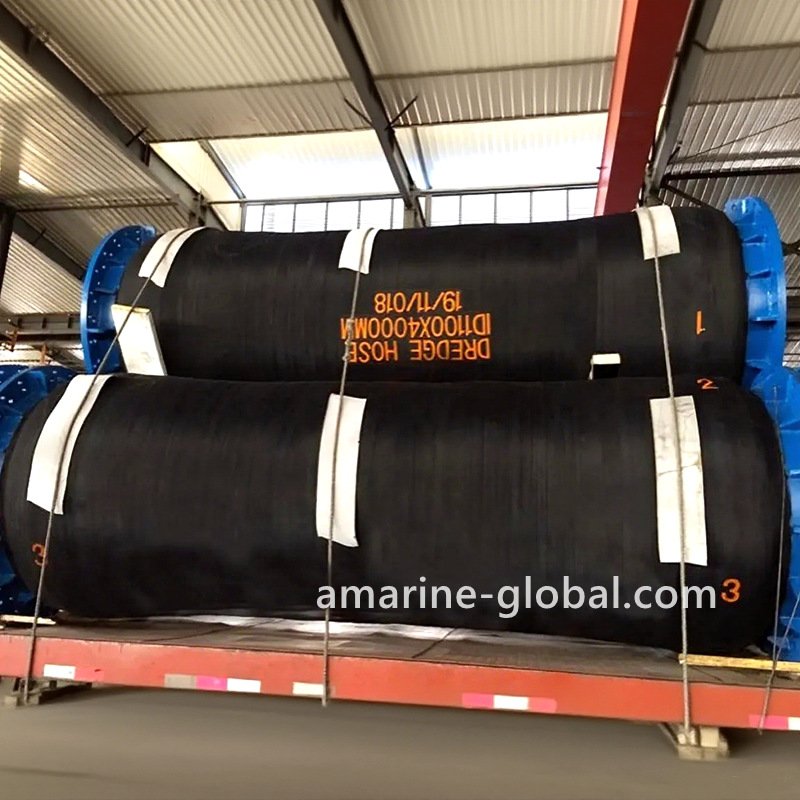
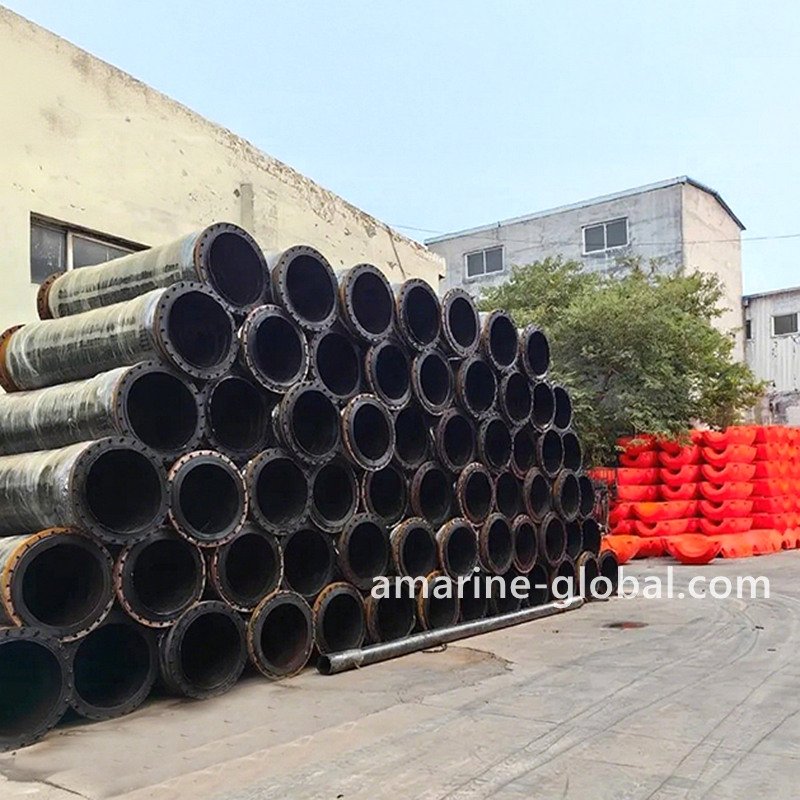
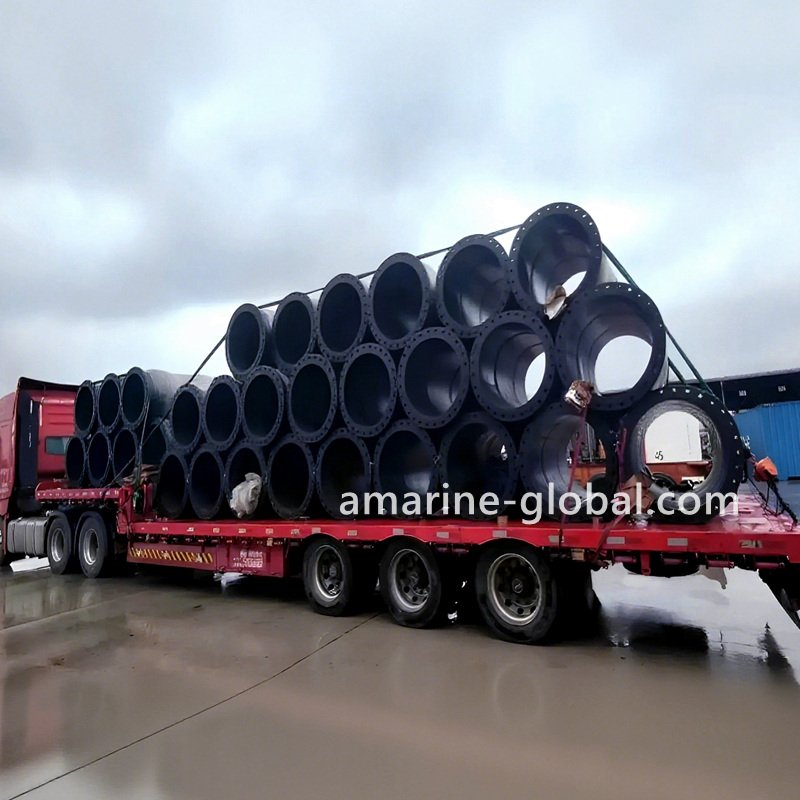
Our dredge hose is specifically designed for fixed or underwater dredging applications where floating performance is not required. Built with multiple layers of high-tensile fabric reinforcement and abrasion-resistant rubber compounds, this hose ensures reliable operation under constant bending, suction pressure, and sediment impact.
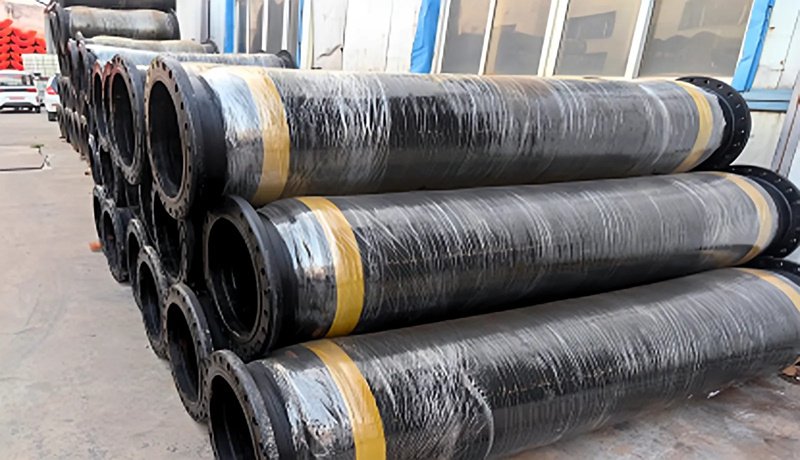
Dredge Hose Product Highlights:
- Optimized for Submerged and Onshore Use
Ideal for underwater pipelines, near-shore connections, and non-floating discharge systems. - Anti-Collapse Structure
The hose maintains shape and stability even under negative pressure or repeated bending. - Durable Rubber Inner Layer
Engineered with NR, BR, and SBR for high abrasion resistance when handling sand, silt, and slurry. - Reinforced for Heavy-Duty Work
Multi-layer, high-tensile strength fabrics effectively resist both internal and external pressure. - Safe & Reliable
Safety factor up to 3:1 – well-suited for continuous operations in dredging and land reclamation. - Cost-Effective Option
Compared to floating hoses, it offers a more economical solution for fixed installations.
Typical Applications:
- Underwater suction or discharge pipelines
- Shoreline dredging systems
- Silt and slurry transfer in rivers, ports, and construction zones
- Flood drainage and civil engineering groundwork
Optional Features:
- Custom lengths and diameters
- Steel flanges, rubber cuffs, or quick couplings
- Ceramic or UHMWPE lining for high-abrasion tasks
- External anti-aging coatings for extended service life