
Featured Products
Limited Time Offer
Special Edition
Buy This T-shirt At 20% Discount, Use Code OFF20

Worldwide Shipping
It elit tellus, luctus nec ullamcorper mattis, pulvinar dapibus leo.

Best Quality
It elit tellus, luctus nec ullamcorper mattis, pulvinar dapibus leo.

Best Offers
It elit tellus, luctus nec ullamcorper mattis, pulvinar dapibus leo.

Secure Payments
It elit tellus, luctus nec ullamcorper mattis, pulvinar dapibus leo.
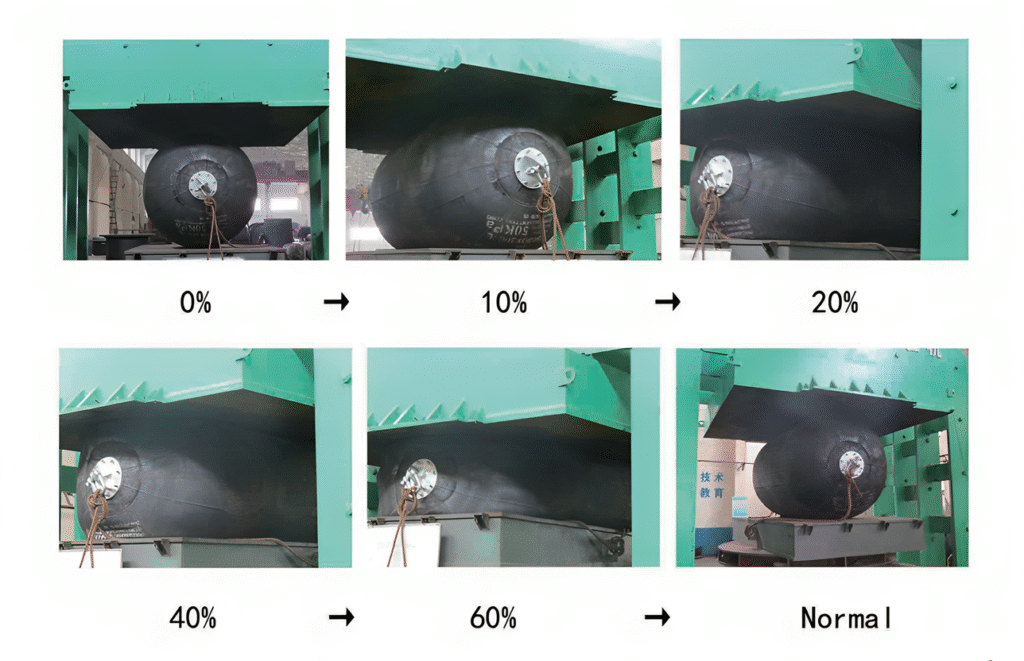
What the Pressure Test Means for You
Proven Performance, Tested Strength
During pressure testing, our pneumatic fenders perform safely from low to extreme loads. They deliver high energy absorption, low reaction force, and stable recovery, ensuring vessel and dock protection in real berthing conditions.
- High energy absorption without compromising vessel safety
- Low reaction force to minimize hull stress
- Reliable performance even under maximum pressure
You ask, we answer
For any questions or inquiries about Yokohama Pneumatic Fenders, feel free to contact us anytime.
The fender contains high-pressure air (typically 50–80 kPa). When a vessel compresses the fender, the internal air absorbs kinetic energy, reducing impact forces on the vessel and dock.
Yes, internal air pressure can be adjusted (commonly 50–80 kPa) to optimize energy absorption and reaction force based on vessel and berth requirements.
Large fenders may include a pressure relief valve to release excess air in extreme impact conditions, preventing overpressure damage.
Sizing depends on:
Vessel dimensions and displacement
Required energy absorption (GEA value)
Berthing speed and site conditions
Typically determined by an engineer based on berthing analysis.